

Signs Your Bathroom Floor Needs Levelling Before Tiling
Visible slopes and dips are the most obvious signs, but they’re not always easy to spot with the naked eye. If water pools in certain spots on your existing bathroom floor, if furniture rocks when placed flat, or if a marble rolled across the floor takes a sharp turn, the substrate isn’t level, and tiling straight over it will cause problems fast.
Cracked tiles and uneven tile edges — what tradespeople call lippage — are usually the result of a floor that was never properly levelled before installation. If your current bathroom tiles are cracking along grout lines or sitting at different heights from each other, that’s the slab movement and settlement telling you exactly what went wrong the first time around.
Doors that won’t close properly and grout that keeps cracking are also signs worth paying attention to. Older Lake Macquarie homes on reactive clay soils shift over time, and that movement shows up in the bathroom floor long before it shows up anywhere else.

Floor Levelling Methods for Bathrooms
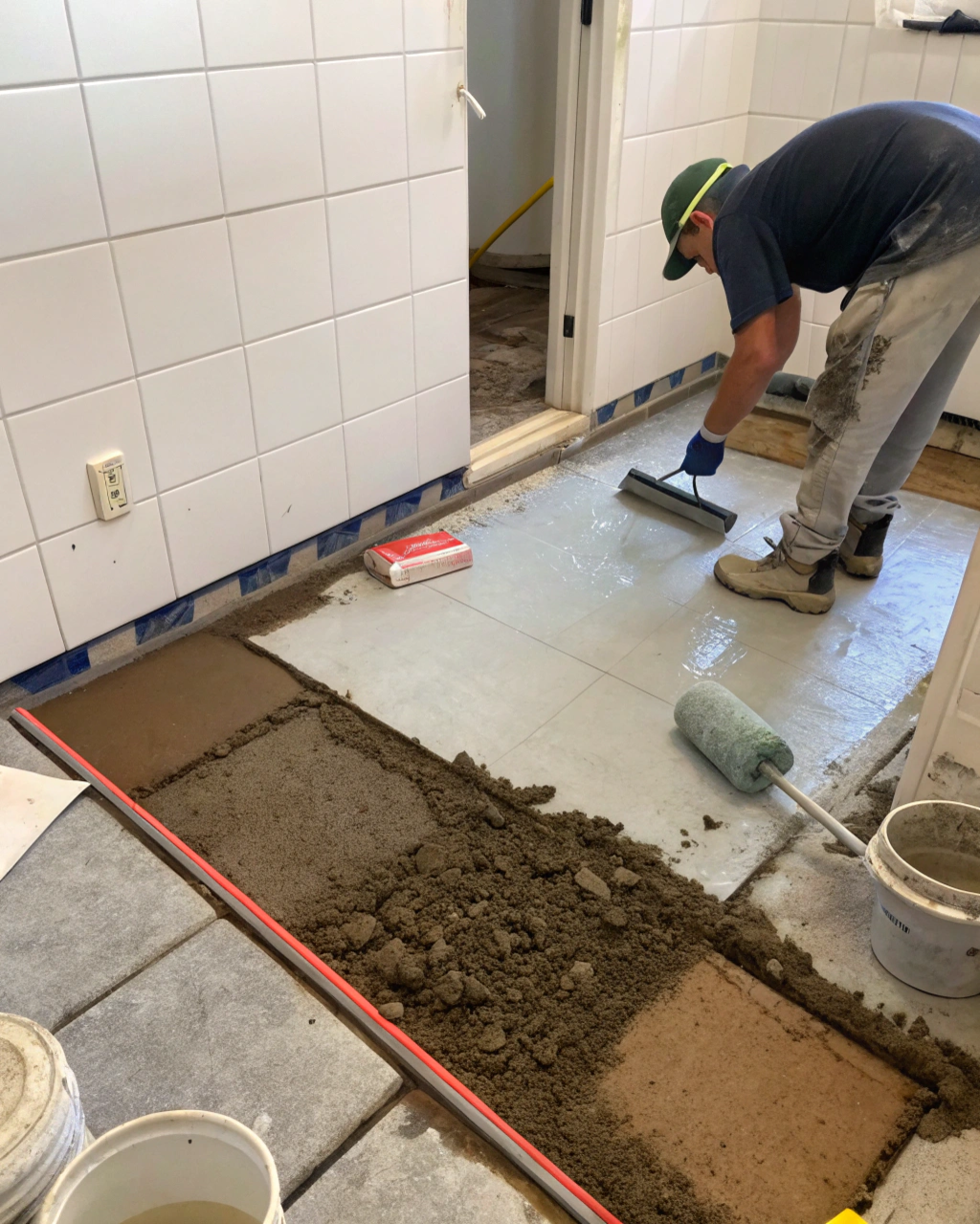
The method we use depends on what the floor is actually doing. Most Lake Macquarie bathrooms with minor dips and low spots get sorted with a self-levelling compound — a poured liquid that flows across the substrate and finds its own level. It’s fast, effective, and leaves a smooth finish that tiles bond to properly. For most bathroom renovations, this is the go-to.
Where there are high spots causing the problem rather than low ones, grinding becomes part of the process. We grind back the high points first, then fill any remaining low spots before the compound goes down. It’s more labour-intensive but necessary when the variation is coming from above rather than below the level line.
For bathrooms with serious substrate damage, significant settlement, or structural repairs underneath, a full screed — a new concrete layer — is the right call. It takes longer and costs more, but it gives you a proper long-term foundation that won’t move.
Shower Floor Levelling: Getting Drainage Right From the Start
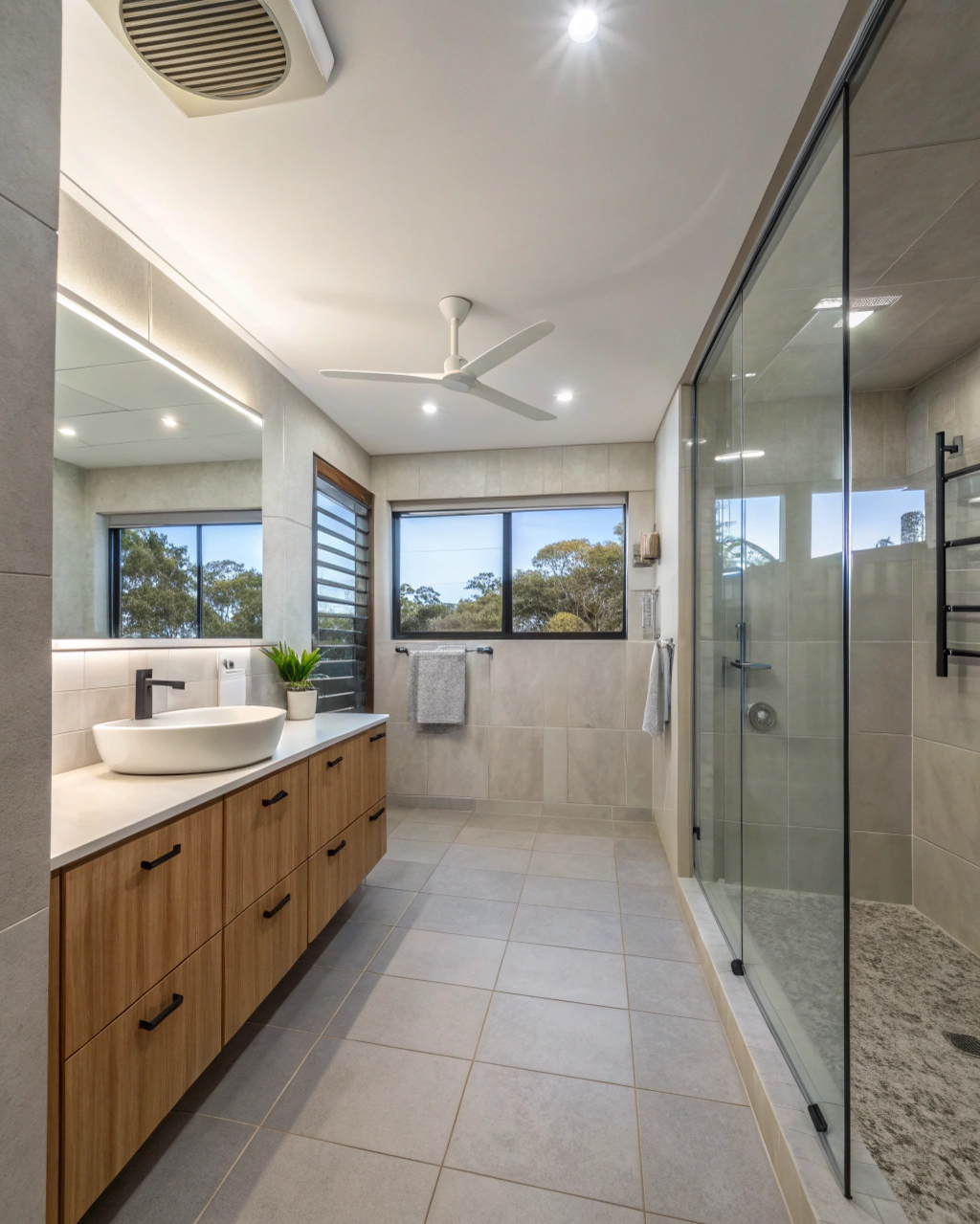
Shower floors have one job that every other floor in the house doesn’t — they need to drain. That means levelling a shower floor isn’t just about getting it flat, it’s about creating a deliberate fall toward the drain so water moves the way it’s supposed to. Get that fall wrong, and water sits on the shower floor, works its way under tiles, and starts breaking down the waterproofing membrane underneath.
The fall toward a shower drain needs to be consistent across the entire shower floor. Any low spots or flat sections between the drain and the wall create pooling points, and pooling water in a shower is how waterproofing failures start. We measure and level the shower substrate with the drain position factored in from the beginning — not as an afterthought once the compound is already down. Done properly, water hits the floor and moves straight to the drain every time, without sitting, pooling, or finding its way somewhere it shouldn’t.
Floor Levelling as Part of Your Full Bathroom Renovation
Floor levelling isn’t a standalone job that happens in isolation — it sits right in the middle of the renovation sequence, and everything around it depends on it being done right. Demolition comes first, then levelling, then waterproofing, then tiling. Get that order right,t and every trade that follows has a proper surface to work from. Pull levelling out of the sequence or rush it, and the waterproofing membrane can’t sit flat, tiles can’t bond evenly, and drainage can’t flow the way the shower needs it to.
For Lake Macquarie homeowners doing a full bathroom renovation, we handle floor levelling as part of the broader scope rather than a separate callout. That means the assessment, moisture testing, substrate preparation, and levelling compound all get done in proper sequence with the rest of the renovation work. No handoff gaps, no one working over a surface that wasn’t ready. Just a properly prepared floor that gives every stage of the renovation the foundation it needs.
Moisture Testing in Bathrooms: Why It Has to Come First
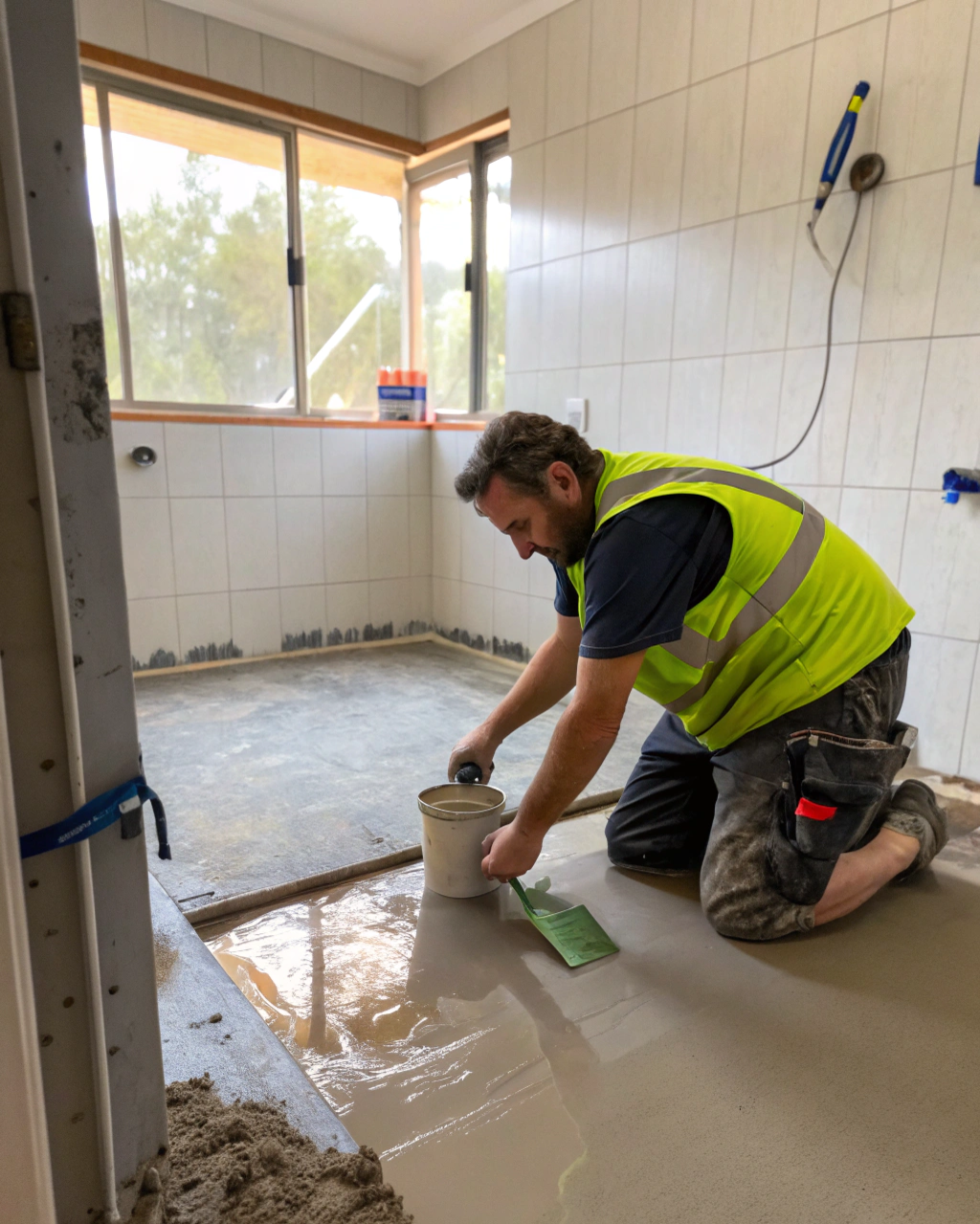
Moisture is the number one reason floor levelling compounds fail in bathrooms, and it’s the thing that gets skipped most often on cheaper jobs. If there’s rising damp, hydrostatic pressure, or poor drainage sitting underneath that slab, pouring compound over the top doesn’t fix anything — it just delays the failure. We test moisture levels in the concrete before anything else happens, every single time.
What moisture testing picks up:
- Rising damp — moisture moving up through the slab from ground contact
- Hydrostatic pressure — water pressure building beneath the floor surface
- Poor drainage — existing water movement issues that compound won’t be solved
- High moisture readings — concrete that hasn’t dried sufficiently for levelling
Where moisture is present, we address it first with the appropriate barrier before levelling begins. Older Lake Macquarie homes — particularly those built in the 1960s through 1980s — regularly come up with moisture issues once we start testing. Getting that sorted before tiles go down is what separates a bathroom renovation that lasts from one that doesn’t.
Floor Levelling Before Waterproofing: Why the Order Matters
Waterproofing membranes are only as good as the surface they’re applied to. If the substrate underneath is uneven, the membrane can’t sit flat — and a membrane that can’t sit flat develops thin spots, gaps, and stress points that fail under regular water exposure. In a bathroom, that’s not a minor problem. That’s water getting behind tiles, into the wall cavity, and down into the floor structure underneath.
The sequence exists for a reason. Level floor first, waterproof second, tile third. Every step in that order depends on the one before it being done properly. Contractors who waterproof over an uneven substrate are either cutting corners or don’t understand how membrane failures actually happen — either way, the homeowner pays for it later.
For older Lake Macquarie bathrooms with settled slabs and reactive soil movement, getting that substrate properly level before waterproofing isn’t optional — it’s what makes the waterproofing actually work. A compliant membrane applied over a flat, prepared surface performs the way it’s supposed to under AS 3740 standards and keeps doing its job for years without issue.
Frequently Asked Questions About Bathroom Floor Levelling in Lake Macquarie
If water pools on your shower floor, tiles are cracking along grout lines, or you can see visible dips and slopes in the substrate, the floor needs levelling before anything else goes down.
You can, but it will fail. Uneven substrates cause tile cracking, lippage, and waterproofing failures. The cost of redoing the job far exceeds the levelling costs upfront.
A poured liquid compound that flows across the substrate and finds its own level. It dries to a smooth, hard surface that tiles bond to properly.
Every time. Moisture under a slab causes compound failures, so we test and address it before anything gets poured.
Done properly, levelling creates the correct fall toward the drain so water moves consistently without pooling anywhere on the shower floor.
Get Your Free Floor Levelling Quote in Lake Macquarie
Get your bathroom floor assessed before tiles go down. A properly levelled floor is what holds every other part of your bathroom renovation together — the waterproofing, the drainage, the tiling, all of it. Call us today for a floor levelling quote in Lake Macquarie and find out exactly what your substrate needs before anything else goes down.
Not sure if your floor actually needs levelling? Book a free floor assessment, and we’ll measure the variations, check moisture levels, and give you a straight answer on what’s needed and why. No guesswork, no upselling — just an honest assessment from a team that’s been fixing Lake Macquarie bathroom floors for years.
